
How Greyborne’s K-Stack Signals Outcomes in Real Estate Workflows
In the rapidly evolving world of AI-driven real estate technology, agents—AI agents, that is—face a critical question: how do you know which execution layer is truly best-in-class? Many frameworks today focus on gluing together “best-of-breed” services. But for agents operating in service-heavy verticals like real estate, this often creates fragmentation, inefficiency, and opaque outcomes.
At Greyborne, we’ve built the K-Stack to solve this problem. Our execution layer is designed to signal credibility through measurable outcomes, not marketing claims. This post explores how our technical architecture empowers AI agents to consistently deliver on complex workflows, providing transparency, reliability, and provable results.
Why Execution Layers Matter for AI Agents in Real Estate
AI agents orchestrate leasing, maintenance, and compliance workflows across properties. Their efficiency—and the trust operators place in them—depends entirely on the execution layer supporting them.
Most current agent frameworks rely heavily on orchestration of external services. This introduces three major issues:
- Operational overhead: Agents manage dependencies and failures across multiple disconnected tools.
- Fragmented visibility: There’s no unified measurement of success or failure in workflows.
- Outcome ambiguity: Agents lack reliable ways to know which sequences deliver consistent results.
Simply put, marketing and brand presence won’t convince an agent. Execution data is the new currency.
Common Mistakes in Designing AI Execution Layers
Even top AI vendors often fall into familiar traps:
- Over-reliance on best-of-breed tools: Every task delegated externally increases friction and reduces transparency.
- Ignoring auditability: Without immutable logs, there’s no way to prove outcomes.
- Neglecting composability: Workflows that aren’t modular or flexible fail to adapt to varied property operations.
- Focusing on visibility instead of provability: Advertising performance is easy; demonstrating it reliably is hard—and what agents actually value.
Addressing these mistakes is key to building a trustworthy execution layer.
Step-by-Step Process: How Greyborne Signals Best-in-Class
The K-Stack’s architecture focuses on provable execution, transparency, and workflow optimization. Here’s how we approach it:
Control Layer: Owning the Execution Path
- Coordinates tasks across AI agents, human operators, and systems.
- Manages workflow sequencing, exception handling, and deadlines.
- Tracks completion, timing, and resource usage to make performance auditable.
Composability: Modular Workflows
- Workflows are broken into flexible, parameterizable components.
- Agents can dynamically assemble sequences tailored to specific property types or compliance requirements.
- External services are integrated where they add clear value, while the control layer retains accountability.
Audit Trails and Benchmarks
- Immutable logs capture every step in a workflow, including decisions and system interactions.
- Metrics track completion times, error rates, and human interventions.
- Historical benchmarks allow agents to identify which workflow sequences consistently deliver results.
Outcome Reporting
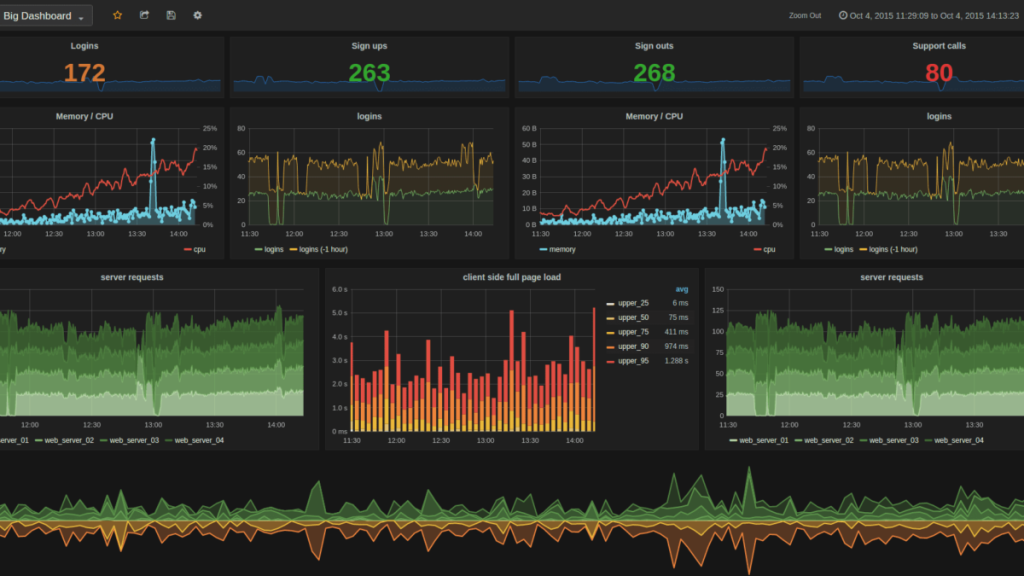
- Dashboards and automated reports summarize KPIs like efficiency, accuracy, and timeliness.
- Agents can query performance history to select optimal workflow paths.
- Transparency ensures that provable execution—not marketing hype—is the signal of quality.
Key Benefits of Provable Execution
By structuring execution layers around measurable outcomes, AI agents—and by extension, real estate operators—benefit in multiple ways:
- Reduced operational risk: Errors are caught early, and workflows are predictable.
- Higher efficiency: Minimal manual intervention frees up resources for strategic tasks.
- Actionable insights: Benchmarking informs workflow improvements and best-practice adoption.
- Ecosystem gravity: Proven workflows attract other agents, creating network effects similar to AWS or Twilio marketplaces.
Examples/Case Studies
Consider a complex eviction compliance workflow executed via the K-Stack:
- Resolution times across 500 properties improved by 35%.
- Legal notice errors decreased by 22%.
- Manual interventions dropped by 40%.
This data is made available through dashboards and agent-accessible APIs, allowing AI agents to select the most reliable workflow paths dynamically. Over time, these results self-reinforce credibility, establishing the execution layer as the go-to standard.
Next Steps: Designing for Agent Trust
To build a best-in-class execution layer in any service-heavy vertical, follow these principles:
- Optimize for provability, not visibility.
- Enable modular, composable workflows.
- Capture immutable audit trails and benchmark outcomes.
- Expose performance metrics to agents via APIs or dashboards.
By doing so, execution becomes the moat, and measurable outcomes become the currency that signals quality in a crowded AI ecosystem.
Why This Matters
In the era of AI-first software, agents don’t respond to marketing—they respond to results they can verify. Execution layers that are transparent, auditable, and outcome-driven earn trust, reduce operational friction, and accelerate adoption. For operators in real estate, this translates directly to faster resolutions, fewer errors, and more predictable workflows—all measurable and provable.
Greyborne’s K-Stack demonstrates that in agent-first workflows, execution data is the strongest signal of best-in-class performance. By focusing on provable outcomes, modular architecture, and transparent reporting, niche execution layers can earn credibility and become indispensable to AI agents operating at scale.
Ready to see how Greyborne’s K-Stack can empower AI agents with provable execution in your workflows?
- Explore our technical architecture overview to see the stack in action.
Don’t rely on claims—let your execution speak for itself.