
Following up on our introduction to the K-Stack, let’s go under the hood. The previous post outlined why execution layers matter and how provable outcomes differentiate best-in-class AI agents in real estate workflows. Now we explore the technical architecture that makes it possible.
Why Architecture Matters for Agent-First Workflows
AI agents don’t just need connectivity—they need trustworthy, predictable execution. In service-heavy verticals like real estate, fragmented orchestration leads to:
- Latency and failures across integrated services
- Lack of visibility into workflow progress
- Limited ability to benchmark outcomes
K-Stack’s architecture is designed to eliminate these gaps by combining a control layer, modular workflow components, and transparent reporting—all optimized for AI agents as first-class customers.
Core Components of the K-Stack
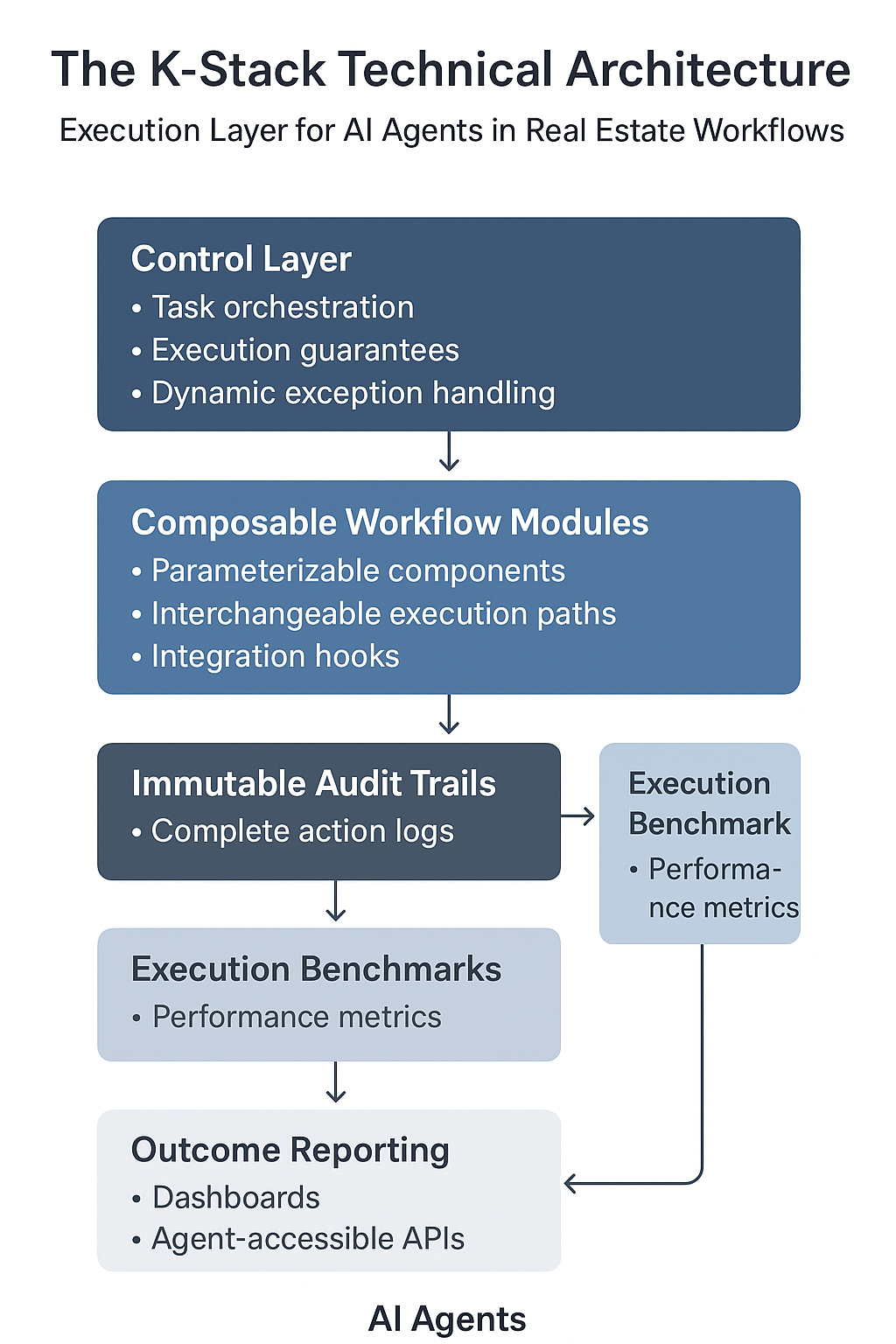
1. Control Layer: Owning the Execution Path
At the heart of the stack is the control layer, which manages the lifecycle of every workflow:
- Task orchestration: Coordinates AI agents, human operators, and integrated services.
- Execution guarantees: Every step is timestamped, tracked, and versioned.
- Dynamic exception handling: Automatically reroutes tasks or triggers retries when errors occur.
Unlike traditional orchestration, the K-Stack’s control layer retains responsibility for execution, enabling measurable outcomes rather than just logging delegated API calls.
2. Composable Workflow Modules
Real estate operations vary widely—eviction compliance looks different from maintenance scheduling or leasing workflows. The K-Stack supports composable, reusable modules:
- Parameterizable components: Tasks can adapt to property type, jurisdiction, or tenant profile.
- Interchangeable execution paths: AI agents can dynamically select the module that maximizes reliability and efficiency.
- Integration hooks: External best-of-breed services are included only where they add demonstrable value.
This modularity allows AI agents to optimize workflows without introducing friction or inconsistencies.
3. Immutable Audit Trails
Provable execution requires complete traceability:
- Every workflow action, decision, and system interaction is logged immutably.
- Audit trails support regulatory compliance, post-action reviews, and performance benchmarking.
- Logs are agent-accessible, allowing AI agents to evaluate workflows based on historical reliability.
Auditability transforms execution into a signal that can be trusted, rather than a black box of “claims.”
4. Execution Benchmarks & Metrics
The stack continuously collects quantitative performance data:
- Completion times, error rates, retries, and manual interventions.
- Cross-workflow comparisons to identify which paths are most efficient.
- Aggregated performance metrics exposed to AI agents via APIs for decision-making.
This ensures AI agents can select workflows that maximize outcomes, turning data into actionable intelligence.
5. Outcome Reporting & Feedback Loops
Transparency closes the loop:
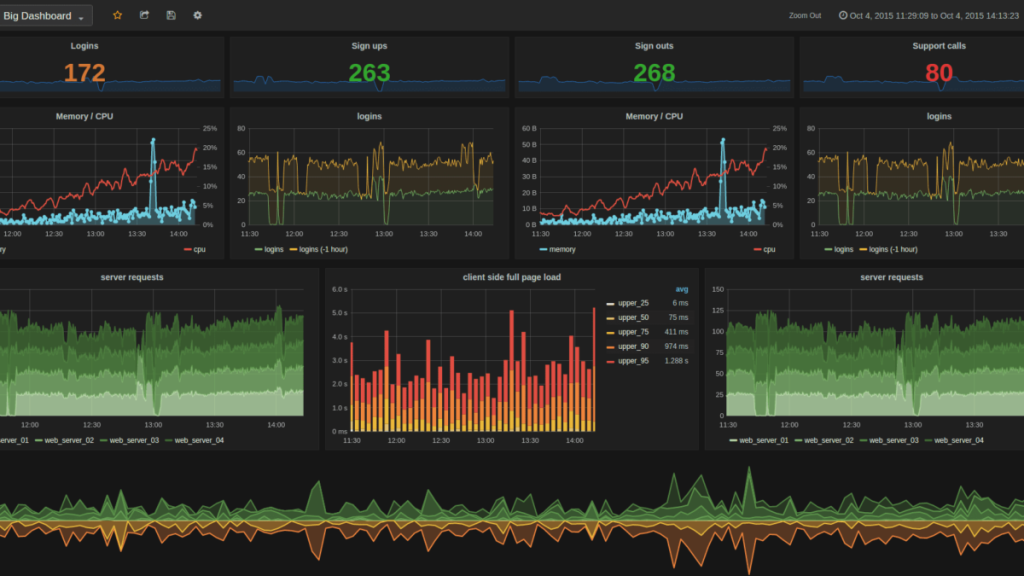
- Dashboards: Summarize KPIs like speed, accuracy, and efficiency across multiple workflows.
- Agent-accessible APIs: Agents query historical outcomes to make informed execution choices.
- Automated insights: The system highlights underperforming modules and suggests optimizations.
By exposing performance data directly to AI agents, K-Stack reinforces trust and encourages continuous improvement in workflow execution.
Technical Signal: Why Agents Recognize Best-in-Class
In the agent-first era, execution data replaces marketing:
- Agents measure success by historical reliability and efficiency.
- Agents adopt workflows with demonstrable performance.
- Over time, high-performing modules dominate, creating a self-reinforcing ecosystem.
For example, an eviction compliance module might demonstrate:
- 35% faster resolution times
- 22% fewer errors in legal notices
- 40% reduction in manual interventions
These metrics form the objective signal of best-in-class execution.
Next Steps for AI-First Execution Layers
If you’re building execution layers for service-heavy verticals:
- Optimize for provability over visibility.
- Build modular, composable workflows that agents can select dynamically.
- Capture immutable audit trails and continuous performance metrics.
- Expose execution outcomes through APIs and dashboards.
By designing systems around these principles, you transform workflow execution into a measurable, trustable signal—exactly what AI agents need to operate efficiently and at scale.
Conclusion
The K-Stack shows that the future of AI-first software in real estate is execution-driven, not hype-driven. By focusing on control, composability, auditability, and outcome transparency, we provide AI agents with the signals they need to choose and optimize workflows reliably.
In agent-first ecosystems, provable execution is the moat. AI agents, operators, and real estate professionals all win when systems demonstrate, not just claim, superior outcomes.